

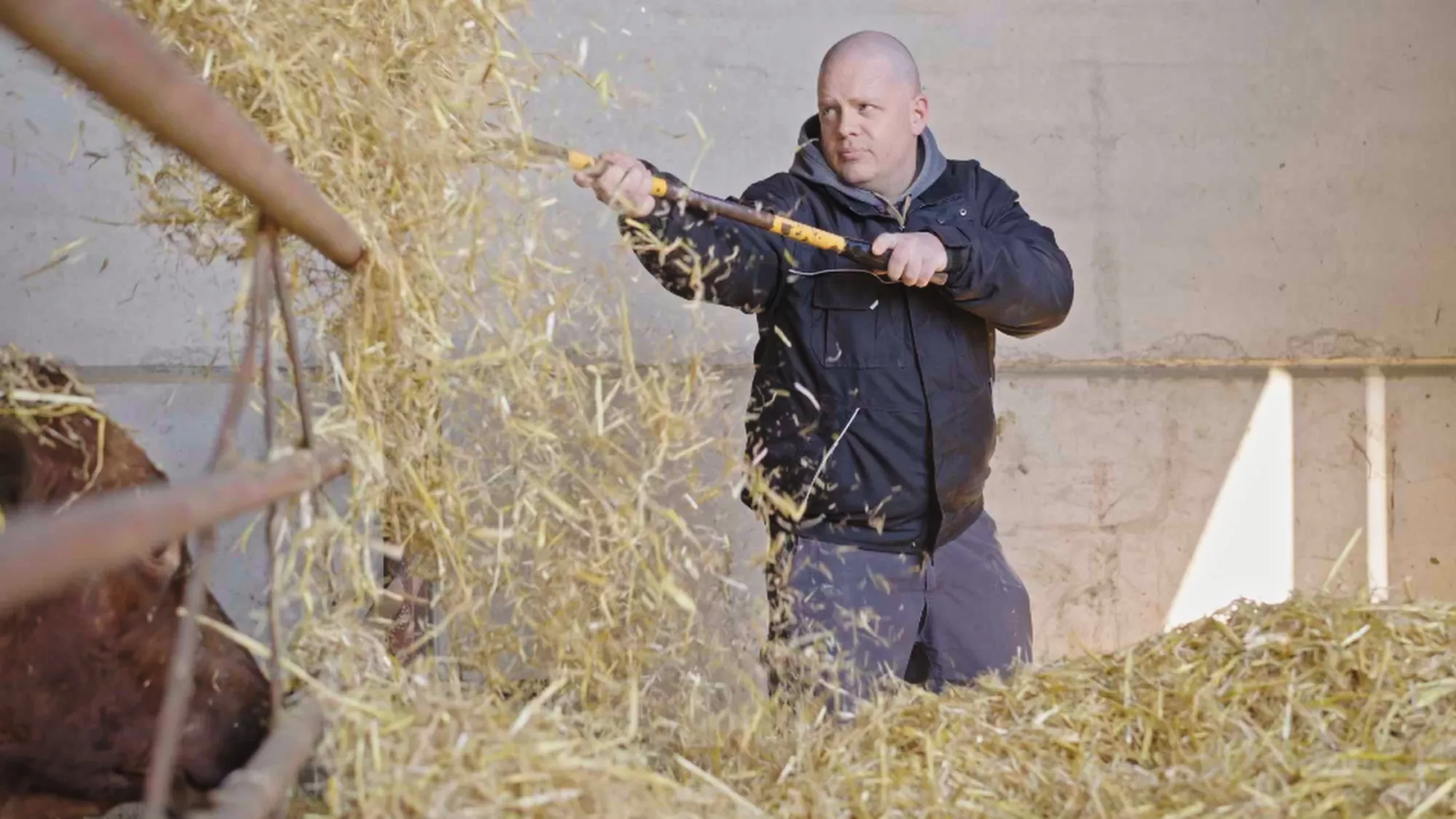
“Starting the calf off right is the most important part of a calf’s life. We all know the importance of colostrum, and the importance of UMBIREZ TM has become very obvious as well”
– Mark Jelley, Perkins Lodge Farm
The herd calve indoors over eight weeks from mid-February to the end of March. During the calving season cows are housed on deep-bedded straw yards, with newborn cows and calves moved to individual calving pens within a few hours of calving. Once the calves are dry, tagged and suckling well they are turned out to grass, usually within 24 hours of birth, though dystocia-born calves can delay this.
Before the 2025 season, the farm team used 10 % iodine applied once ASAP after birth, and once more before turnout (approximately 12 – 24 hours later). Over the previous four years, the farm had seen a rising increase in calves with navel ill, and an increase in the amount of antibiotics used in calves as a direct result. In 2024 16% of calves required treatment with antibiotics for navel ill. Additionally, the farm team reported that these calves affected by navel ill at birth were more likely to suffer pneumonia or be slower growing.
Mark had tried a combination of 50 % surgical spirit (80% isopropyl alcohol) and 50 % strong (10 %) iodine in one previous year but observed no benefit.
In Spring 2025, Mark approached NoBACZ having heard about the superior benefits shown over 10 % iodine in Dr Lovatt’s clinical trial. The Perkins Lodge team were keen to understand if it could help improve outcomes in the suckler herd.
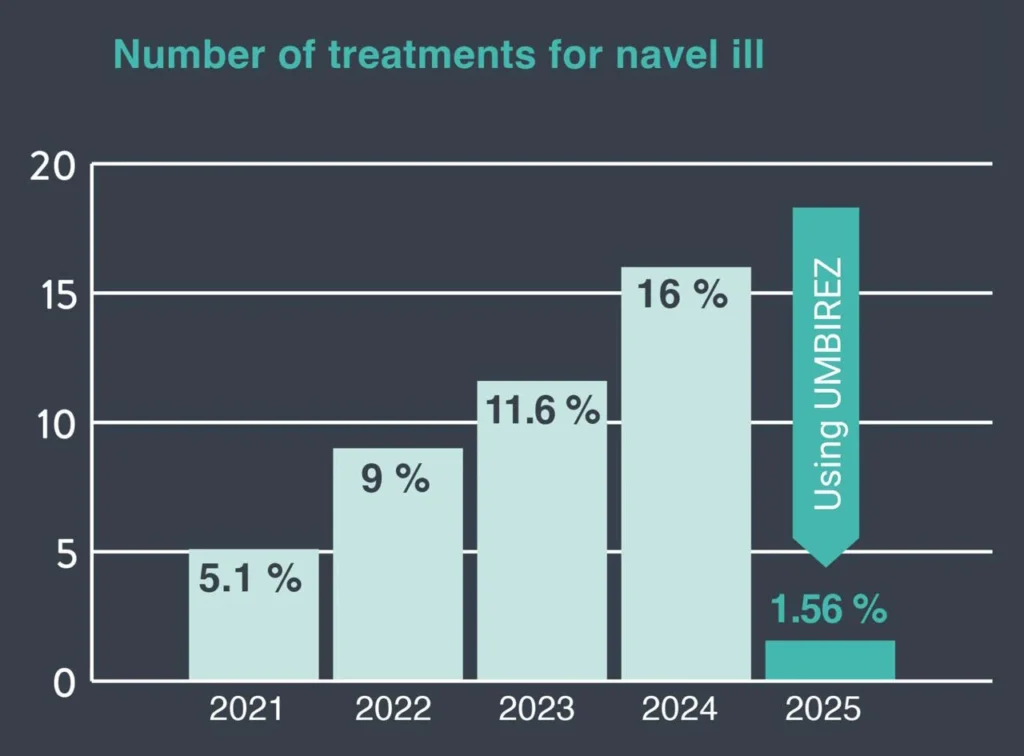
The only change made at Perkins Lodge Farm for the 2025 calving season was to use UMBIREZ instead of 10 % iodine on navels after birth.
The results were impactful and obvious:
As a result, Perkins Lodge Farm’s protocols for all future calving periods have changed to using UMBIREZ as the default product: providing superior navel protection, and better outcomes.
Additionally, the team at Perkins Lodge Farm now use UMBIREZ at ear-tagging sites.